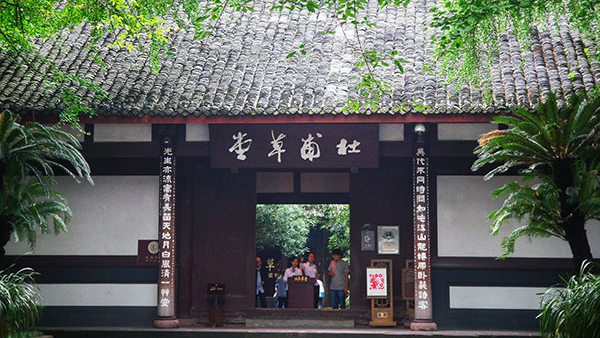
Du Fu Thatched Cottage
Overview
Du Fu Thatched Cottage is a renowned cultural site located in Chengdu, Sichuan province. It is dedicated to commemorating Du Fu (712-770), one of China's greatest poets, often referred to as the "Poet Sage". The site is not only a tribute to Du Fu's literary legacy but also a significant cultural and historical museum attracting visitors from around the world.
Historical Background
In 759, Du Fu sought refuge in Chengdu during a time of social and political turmoil. In 760, with the assistance of his friend Yan Wu, an official in Sichuan, Du Fu built a simple thatched cottage by the Flower Bathing Brook. He lived there for approximately three years and nine months. Despite his hardships, Du composed over 240 poems during his stay in the cottage, capturing the suffering and struggles of the common people, as well as reflecting on the socio-political climate of the Tang Dynasty (618-907) .
The Museum Complex
The Du Fu Thatched Cottage Museum was established to preserve and promote the cultural heritage of Du Fu's life and works. The museum spans approximately 16 hectares and includes several key structures:
-
Memorial Hall: This hall is dedicated to Du Fu's life and works, showcasing his contributions to Chinese literature and culture. It provides insights into his poetic style and philosophical reflections.
-
Thatched Cottage Replica: A replica of Du Fu's original cottage, built in 1997 according to the descriptions in his poems, allows visitors to experience the rustic simplicity of his living conditions.
-
Da Ya Tang Hall: Known as the Hall of Great Poets, this section celebrates the literary achievements of Du Fu and other prominent poets.
-
Shrine of Gongbu: Named after Du Fu's official title, this shrine houses statues of Du Fu and other literary figures who admired his work.
-
Library and Exhibition Area: This area contains a vast collection of books, ancient wooden carvings of Du Fu's poems, and translations of his works in various languages. It also displays Tang Dynasty artifacts discovered on the site, including bowls, chess pieces, and metalware.
Cultural Significance
Du Fu's poetry is renowned for its compassionate portrayal of human suffering and its critique of social injustice. His work has had a lasting impact on Chinese literature and culture, earning him the title of "China's Shakespeare". The museum not only serves as a historical monument but also as a cultural hub, hosting events and activities to celebrate Du Fu's legacy. Each year, an annual celebration at the museum honors Du Fu, where intellectuals and students recite his poems.
The museum is a part of the Thousand-Poem Tablet Project, initiated by the Chengdu municipal government, which features stone tablets inscribed with Du Fu's poems by famous calligraphers. This initiative further enshrines Du Fu's contribution to Chinese literature.
Visitor Experience
Visitors to the Du Fu Thatched Cottage Museum can explore its tranquil grounds, which include beautifully landscaped traditional Chinese gardens, bamboo groves and a plum garden. The museum offers a serene environment for reflecting on Du Fu's poetry and its historical context. Various cultural activities and recitations are held regularly, allowing visitors to immerse themselves in the rich literary culture of the Tang Dynasty.
The museum is accessible from Chengdu's city center and is open year-round, with varying hours depending on the season. General admission is priced at 60 yuan. For those interested in Chinese poetry, history and culture, the Du Fu Thatched Cottage Museum remains a must-visit destination, offering a deeper understanding of one of China's most celebrated poets and the era he lived in. Article reference1. Literary attraction. chinadaily.com.cn. 20172. BBC documentary spotlights China's Shakespeare. chinadaily.com.cn. 20203. A literal legacy set in stone. chinadaily.com.cn. 20224. Home among a thousand sorrows. chinadaily.com.cn. 2021Photo Gallery(12 pictures)CategoriesCultural HeritageTagHistorical BuildingCultural LandscapeCity TourismMuseumRelatedDu FuCatalogue1. Overview2. Historical Background3. The Museum Complex4. Cultural Significance5. Visitor Experience- - - []








